
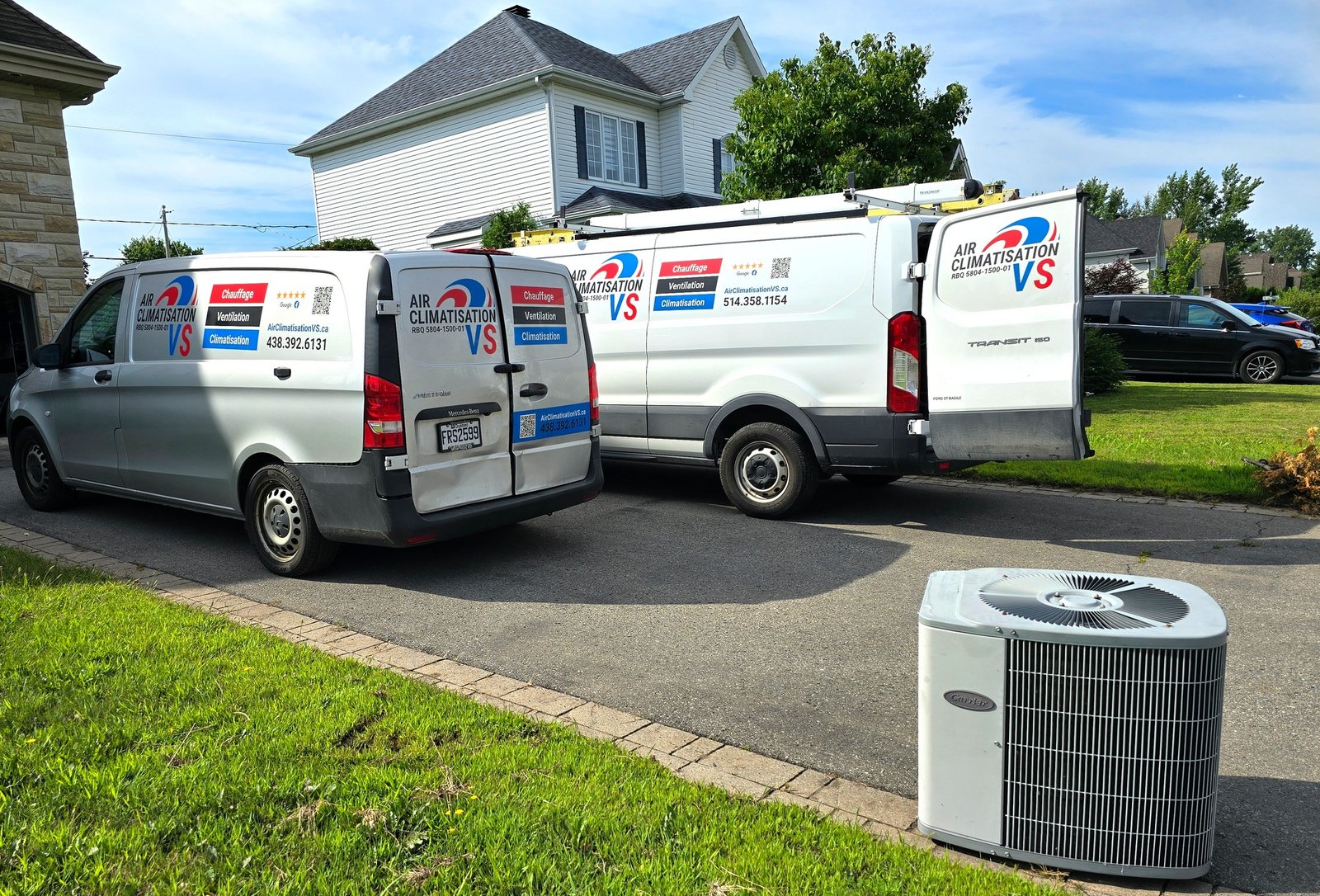
In August 2024, our team replaced the original central HVAC system in a home built in 2005 in Île-Perrot, Quebec. This heat pump installation project included a new Tempstar central heat pump, a matched furnace, a new air exchanger and a smart climate control unit.
The homeowners initially contacted us at Air Climatisation VS because their house was no longer comfortable. During hot weather, the second floor stayed noticeably hotter than the main floor, even when the air conditioner ran non-stop. During winter, they increasingly relied on electric baseboard heaters to keep most rooms comfortable.
The original furnace and central air conditioner were almost 20 years old. They were still operating, but the system was struggling to distribute heating and cooling evenly throughout the house.
The most interesting part of this project came later, when the homeowner shared a before-and-after comparison from Hydro-Québec.
What Hydro-Québec reported before and after the installation
For the billing period from May 7 to July 5, 2024, before we replaced the HVAC system, Hydro-Québec reported that the home had consumed 38% more electricity than its comparison-group average. The home’s score appeared toward the energy-hungry side of the Hydro-Québec efficiency gauge.
For the period from March 6 to May 6, 2026, after the new system had operated through complete heating and cooling seasons, Hydro-Québec described the property as a model of efficiency.
According to the report, with the new heat pump, the home consumed approximately 1,498 kWh less than its comparison-group average, representing a difference of about $130 for that billing period.
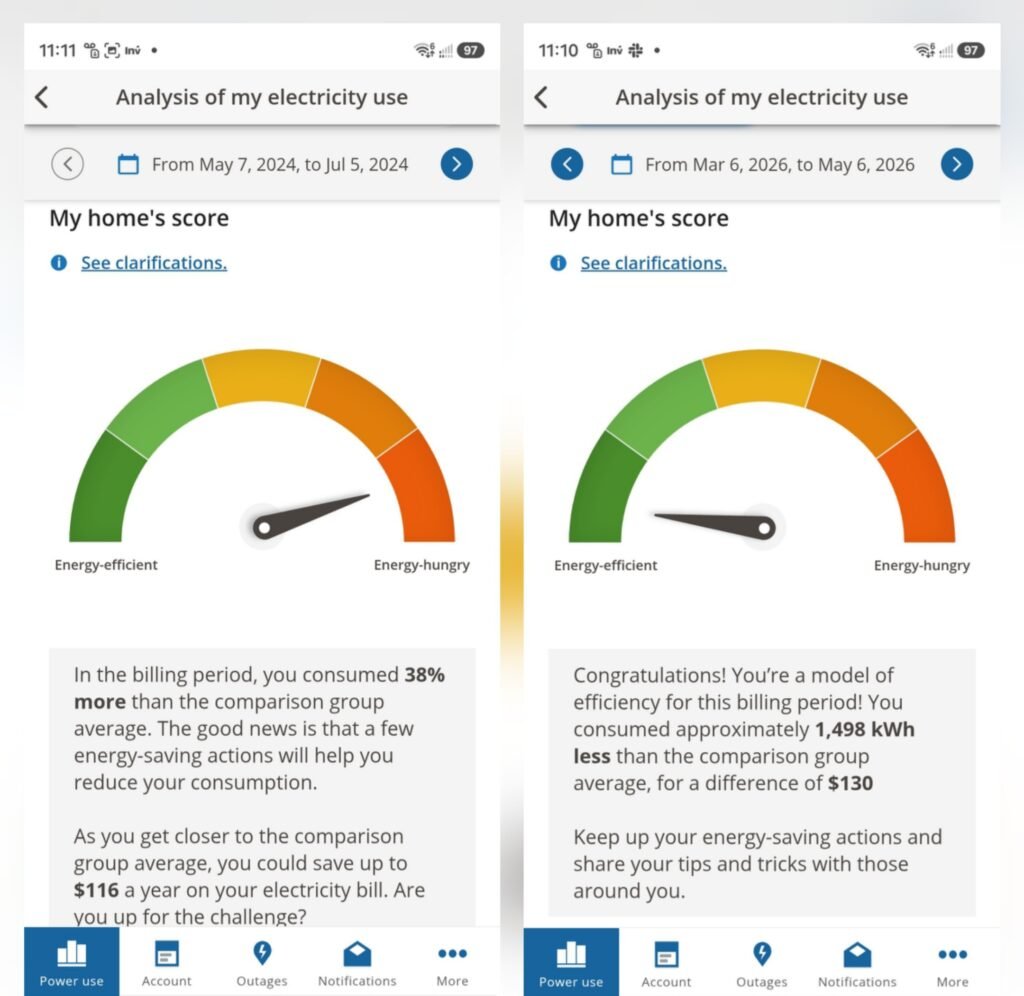
These figures come directly from the homeowner’s Hydro-Québec account, not from calculations prepared by our company.
The comparison does not prove that the new HVAC system alone reduced total household electricity consumption by a specific percentage. The reports cover different seasons, and the home also has an electric pool heater. Weather, occupancy, thermostat settings, hot-water use and other electrical equipment can all affect consumption.
What the comparison does show is still significant. Before the project, Hydro-Québec placed the home well above the consumption average for comparable properties. After the upgrade, a later report placed it substantially below that average.
Why we recommended replacing the complete system
When our senior project coordinator, Tarik, evaluated the home, it was clear that replacing only the outdoor air conditioner would not address the entire problem.
The furnace contained the blower responsible for moving air through the home’s ductwork. The furnace, air conditioner, indoor coil and controls were all from an older generation. Installing one new component while keeping the rest of the aging system could have limited performance and created compatibility issues.
We therefore recommended treating the project as one complete heating, cooling and ventilation upgrade.
Our team installed a Tempstar central heat pump (30,000 BTU), a matched Tempstar furnace and a new air exchanger. The new equipment was connected to the existing forced-air duct system and configured to work together.
According to Yuri, our installation manager with 20 years of HVAC experience, equipment efficiency ratings only tell part of the story. A high-efficiency heat pump will not perform properly if airflow is restricted, the indoor and outdoor components are mismatched or the controls are not configured correctly.
The quality of the design, installation and commissioning matters just as much as the name on the equipment.
Why a heat pump instead of another air conditioner?
A conventional central air conditioner provides cooling only. A central heat pump provides both cooling and heating by transferring heat between the home and the outdoor air.
During summer, it operates much like an air conditioner and removes heat from inside the house. During winter, it reverses the process and transfers available heat from the outdoor air into the home.
Modern cold-climate heat pumps are designed for Canadian winters. Depending on the manufacturer and model, top-performing systems can continue producing heat at outdoor temperatures approaching minus 25°C to minus 30°C.
This does not mean that every heat pump performs the same way in extreme cold. Heating capacity and efficiency change as temperatures fall, so the equipment must be selected using verified low-temperature performance data.
When the heat pump can no longer meet the full heating demand efficiently, the furnace or another backup heating source provides supplemental heat. With properly configured controls, the transition happens automatically.
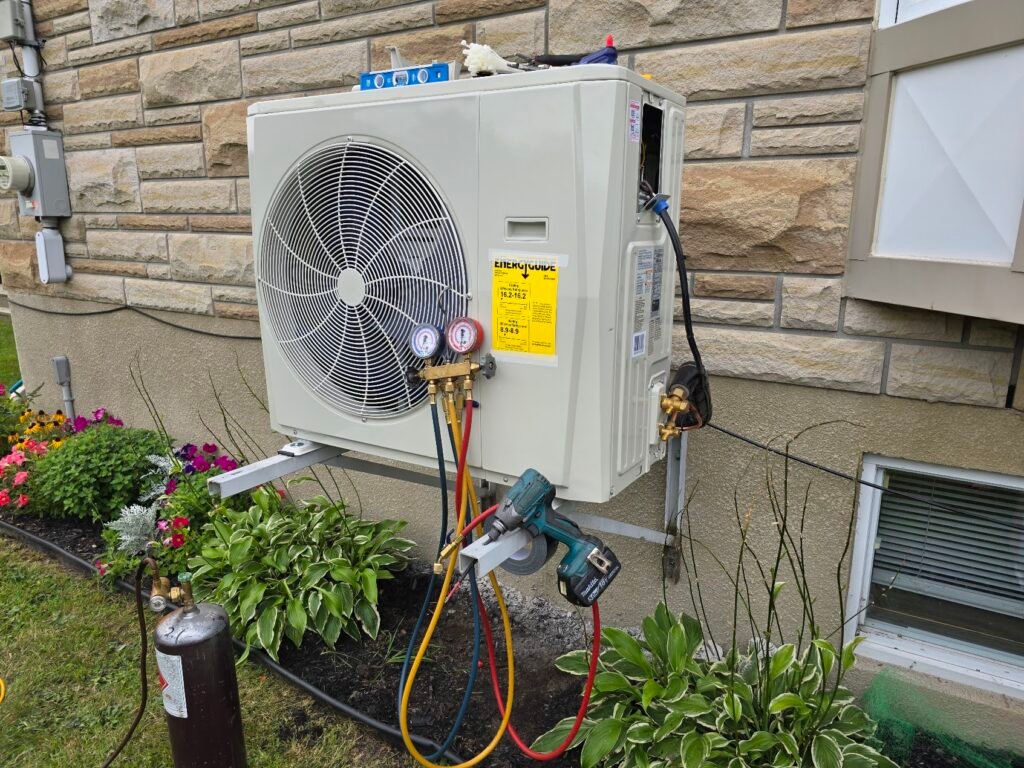
For this homeowner, the heat pump offered several advantages over simply installing another central air conditioner. It restored summer cooling, provided efficient heating during much of the winter and reduced the need to rely as heavily on electric baseboards.
Why the second floor was harder to cool
Warm second floors are a common problem in two-storey homes.
Upper floors usually receive more heat through the roof and sun-exposed windows. They may also be served by longer duct runs or have limited return-air capacity. As equipment ages, reduced blower performance and declining cooling capacity can make these temperature differences more noticeable.
Installing a larger air conditioner is not automatically the answer. An oversized system may turn on and off too quickly, cooling the area near the thermostat before the upper floor becomes comfortable. Short cycles can also reduce humidity control.
The correct approach is to evaluate the equipment, airflow and home together.
In this case, replacing the aging furnace and air conditioner with a matched heat-pump system improved the mechanical side of the problem. Other homes may also require duct adjustments, added return-air capacity, insulation or air-sealing improvements.
The homeowner received a $5,000 federal HVAC grant
The homeowner received a confirmed $5,000 payment through the Canada Greener Homes Grant. That program is now closed. This is an important lesson for homeowners considering an HVAC replacement. Government and utility incentives are not permanent. Funding can be reduced, eligibility requirements can change and programs can close.
We have seen similar changes with electric-vehicle incentives. A large rebate available today may not exist when an aging system eventually fails.
A grant should not be the only reason to replace working equipment. However, when a central system is already 10 to 15 years old, requires frequent repairs or no longer keeps the home comfortable, available financial assistance can make planned replacement much more attractive.
Hydro-Québec currently offers assistance for qualifying heat pumps through its LogisVert program. The available amount depends on the equipment, capacity, installation date and current program rules.
At Air Climatisation VS, we help clients review the programs available at the time of their project and prepare the equipment and contractor information normally required for an application. Final approval always remains with the program administrator.
When should you start planning an AC replacement?
A 10-year-old system does not automatically need to be replaced. Many systems continue operating reliably beyond that point.
However, the 10-year mark is a good time to start monitoring the system more closely and understanding the available options.
Uneven temperatures, weak airflow, frequent repairs, rising electricity use, excessive noise and greater reliance on supplemental heaters can all indicate that the equipment is no longer performing as it should.
Planning before failure gives homeowners more time to compare systems, verify available grants, arrange financing and schedule the work before the busiest heating or cooling periods.
Waiting for an emergency often means fewer equipment choices, longer delays and more pressure to accept the fastest available solution.
What this heat pump project shows
This project shows how much difference a properly selected and installed heat pump can make. Before the upgrade, Hydro-Québec reported that the home was using nearly 40% more electricity than comparable properties. After the new system had operated through complete seasons, the same home was rated as a model of efficiency.
Results will never be identical from one house to another. Insulation, windows, air leakage, the size and layout of the home, ductwork design, thermostat settings and the condition of the existing equipment all affect comfort and energy use.
Still, after serving more than 10,000 clients across Greater Montreal, we know that this type of improvement is not unique. Replacing an aging furnace and air conditioner with a modern, properly matched heat-pump system can improve comfort, reduce reliance on supplemental heating and lower overall energy consumption.
The easiest way to understand what is possible in your own home is to have the system evaluated. Air Climatisation VS offers a free, no-obligation assessment for new installations. We review the existing equipment, ductwork, comfort problems and available financial assistance, then provide a clear recommendation and exact quote.