
By Tarik, Senior HVAC Specialist at Air Climatisation VS
Quick Takeaway
Several single-zone heat pumps and one multisplit system can both provide heating and cooling across multiple areas of a two-storey home. The right configuration depends on room-by-room loads, outdoor-unit placement, refrigerant-line routing, shared capacity and how much replacement flexibility you want later.
What Is the Difference Between Single-Zone and Multisplit Heat Pumps?
When comparing a single-zone vs multisplit heat pump, the main difference is how the indoor and outdoor equipment is connected.
Several independent single-zone systems
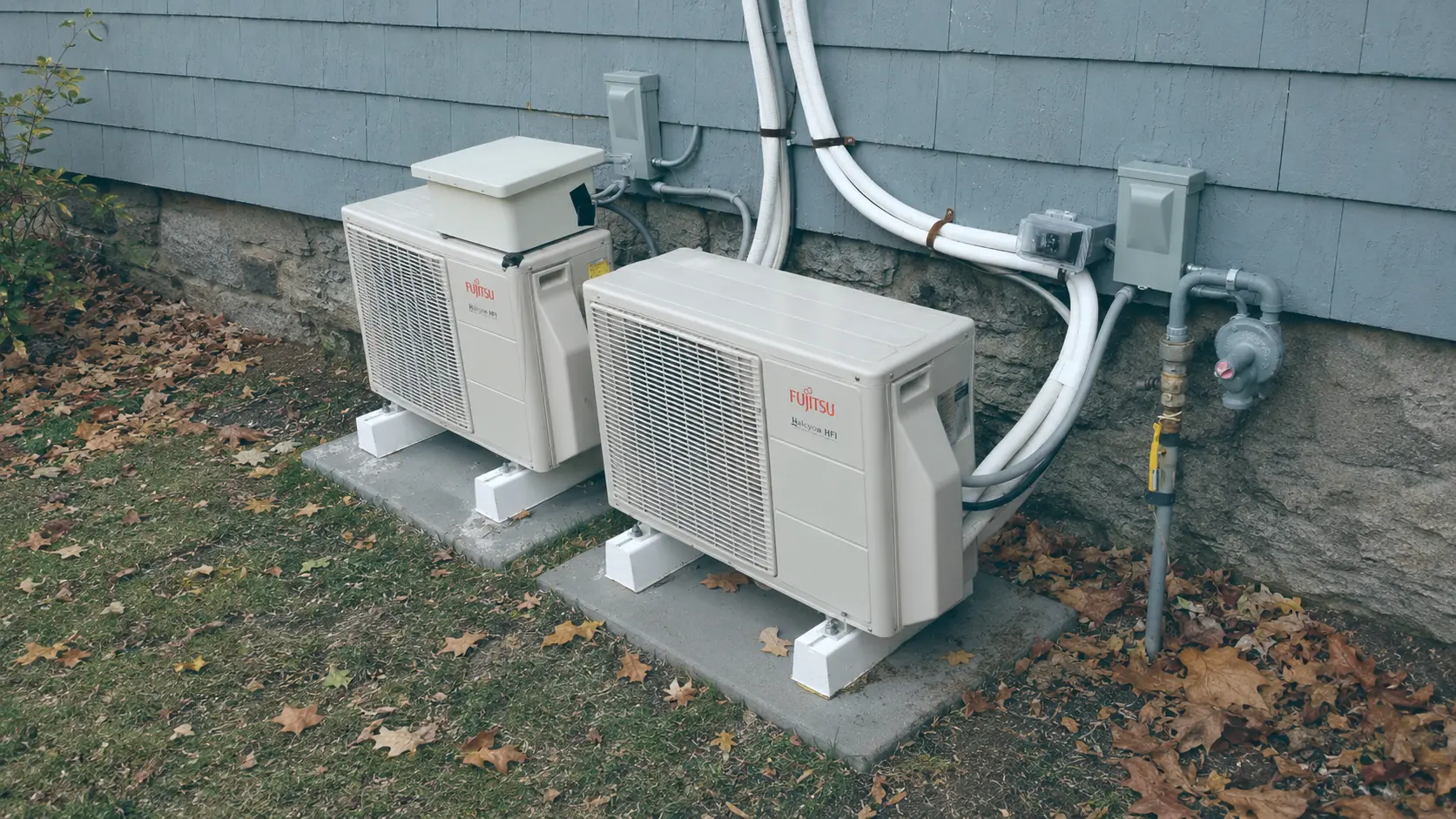
A single-zone system pairs one indoor unit with one outdoor unit. If a home needs three indoor units, it would generally require three separate outdoor units.
Each pair operates as its own system. This allows one zone to function independently of the equipment serving the other rooms.
One multisplit system
A multisplit connects several compatible indoor units to one outdoor unit. Each indoor unit can have its own temperature setting, but all connected zones draw from the same outdoor system and its available capacity.
Think of the difference as several individual electrical circuits compared with several devices sharing one power source. Both arrangements can serve multiple areas, but they distribute equipment and capacity differently.
Outdoor Unit Count and Property Layout
The most visible advantage of a multisplit is that it can reduce the number of outdoor units. This may be useful for a Dollard-des-Ormeaux property with limited side-yard space or few acceptable mounting locations.
However, one outdoor unit does not automatically mean a simpler installation. A multisplit still requires a refrigerant route from each indoor unit to the shared outdoor system. Several line sets may need to pass through ceilings, closets, exterior walls or line covers before converging at one location.
Several single-zone systems require more outdoor equipment, but each indoor unit may connect to the nearest practical exterior location. This can shorten or simplify some routes.
Outdoor placement should also account for:
- Unrestricted airflow
- Snow accumulation and roof runoff
- Defrost-water drainage
- Vibration
- Service access
- Nearby bedrooms, patios and walkways
- Distance from neighbouring properties
Homeowners reviewing their options can also read our guide to choosing a heat pump for a West Island home.
Individual Control and Different Heating Loads
Two-storey homes rarely have identical comfort requirements in every room. Upstairs bedrooms may overheat during summer, while while a shaded room may require more heating during winter. Closed doors, window orientation and insulation also affect each zone.
Both configurations allow individual indoor units to respond to their own settings. The important difference is how capacity is supplied.
With separate single-zone systems, each zone has its own outdoor unit and operating range. Demand in one room does not consume the capacity of another paired system.
With a multisplit, the outdoor unit distributes its available output among the indoor units requesting heating or cooling. If several rooms need substantial output simultaneously, the system must have enough capacity for that combined demand.
Separate temperature settings also do not necessarily mean that a standard multisplit can heat one room while cooling another. Operating modes and permitted indoor-unit combinations depend on the selected equipment.
This is why sizing should begin with each room rather than the home’s total floor area. A large outdoor unit connected to poorly matched indoor units will not correct an inaccurate zone plan.
Refrigerant-Line Routing and Indoor Unit Placement
Indoor-unit placement affects comfort, appearance and installation feasibility. Air must circulate through the intended zone without blowing directly onto a bed, desk or frequently occupied seating area.
The line-set design must also remain within the selected equipment’s limits for total length, individual branch length and elevation difference. These limits vary by model.
Several single-zone systems need separate indoor-to-outdoor routes. A multisplit needs several routes leading to one shared location, sometimes through a branch distribution component. Condensate drainage and access for future service must be planned at the same time.
For a closer look at ductless installation considerations, see wall-mounted heat pump installation in Pierrefonds.
Maintenance and System Dependence
Both configurations have multiple indoor units, so each unit still needs filter cleaning and appropriate access for maintenance. A multisplit does not reduce the number of indoor coils simply because it uses one outdoor unit.
Several single-zone systems create more outdoor units to inspect and keep clear. In return, a problem affecting one paired system will generally remain limited to that zone.
A multisplit has fewer outdoor units, but several rooms depend on the same outdoor system. This shared dependence is worth considering when planning comfort for bedrooms, home offices or other frequently occupied areas.
Future Replacement and Expansion
Separate single-zone pairs can often be replaced individually. This may provide more flexibility if one zone’s needs change or one system reaches the end of its service life before the others.
Multisplit replacement requires careful attention to compatibility across the connected system. Indoor units, outdoor equipment, controls and permitted combinations must be approved to work together.
An unused connection does not guarantee that another indoor unit can be added later. Available capacity, line lengths, electrical requirements and manufacturer-approved combinations still apply. If future expansion is likely, it should be considered during the original design.
Single-Zone vs Multisplit Heat Pump Comparison
| Planning Factor | Several Single-Zone Systems | One Mult Multisplit System |
|---|---|---|
| Outdoor equipment | Several outdoor units | One shared outdoor unit |
| Room control | Independent paired systems | Separate indoor controls sharing outdoor capacity |
| Line routing | Separate routes to different outdoor units | Several routes converge at one location |
| System dependence | Each zone has its own paired system | Multiple zones depend on one outdoor system |
| Replacement | Pairs may be replaced separately | Compatibility across the system matters |
| Future expansion | Another independent pair may be possible | Capacity and approved combinations must be confirmed |
Neither configuration is automatically better or more efficient for every home. The decision should reflect the building, not just the number of indoor or outdoor units.
What Should Be Checked Before Choosing?
A proper on-site assessment should review:
- Heating and cooling load for every intended zone
- Floor plan, stairwell and door locations
- Window exposure and insulation
- Simultaneous demand between floors
- Indoor and outdoor equipment locations
- Refrigerant and condensate routes
- Electrical capacity
- Snow clearance and drainage
- Maintenance access
- Possible future zones
These details reveal whether several independent systems or a shared multisplit offers the more practical layout.
Frequently Asked Questions
Can a multisplit heat pump run only one indoor unit at a time?
Generally, a multisplit can operate when only one connected indoor unit is requesting heating or cooling. Actual operation depends on the equipment’s controls, minimum output and approved configuration.
Are several single-zone heat pumps better for rooms with different heating loads?
They can provide greater separation because every zone has its own outdoor system. However, a properly selected multisplit can also serve rooms with different loads. Room-by-room sizing and simultaneous demand matter more than a universal preference.
Can another indoor head be added to a multisplit system later?
Only if the outdoor unit has sufficient available capacity and the proposed combination is approved by the manufacturer. Connection availability, line lengths, electrical requirements and the existing indoor-unit combination must all be verified.