
By Tarik, Senior HVAC Specialist at Air Climatisation VS
Quick Takeaway
Good heat pump outdoor unit placement must account for snow, unrestricted airflow, roof runoff, defrost water, noise, vibration and future service access.
There is no universal clearance or mounting height for every heat pump. The correct location depends on the selected model, manufacturer instructions, mounting method and conditions around the home.
Why Heat Pump Outdoor Unit Placement Matters
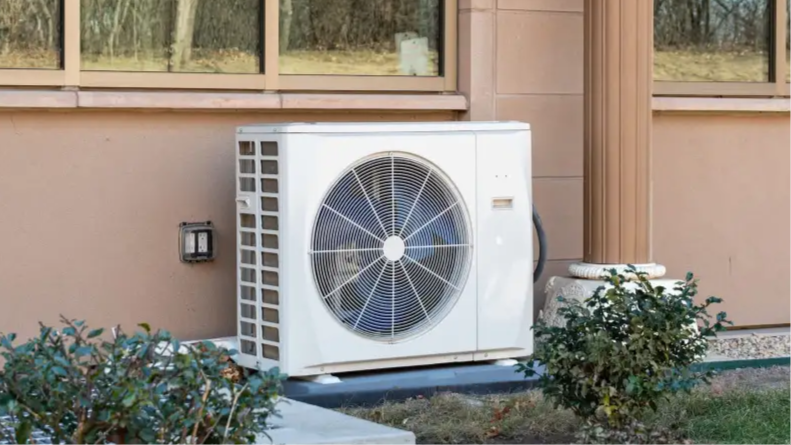
The outdoor unit is not simply a box that needs an available section of wall or ground. It must move a large volume of air, release water during winter operation and remain accessible throughout the year.
Think of the area around the unit as a working envelope. The heat pump needs enough space to draw in outdoor air, discharge it without obstruction and allow a technician to reach its panels and connections.
A location that appears convenient in summer may become problematic after the first heavy snowfall. A side yard can also seem spacious until a fence, snowbank, roof drip line and neighbouring window are considered together.
Outdoor-unit location should therefore be evaluated while choosing a heat pump for a West Island home, rather than after the equipment and indoor-unit positions have already been finalized.
Plan for Snow, Roof Runoff and Defrost Water
Winter conditions around a house are rarely uniform. One wall may remain relatively clear while another collects wind-driven drifts, snow from the roof or piles created by shovelling and snowblowing.
Snow and Airflow
The outdoor unit must remain able to draw in and discharge air throughout the winter. Snow packed around the cabinet can restrict airflow, especially when it reaches the intake or accumulates in front of the discharge.
Mounting the unit above anticipated snow can help, but there is no universal installation height. The correct position depends on:
- Snow accumulation at the proposed location
- Wind-driven drifting
- Snow-removal patterns
- Roof and gutter conditions
- The selected heat pump model
- Manufacturer-required clearances
- The approved stand or bracket
- Safe access to the equipment
The cold-climate heat pump installation best practices published by NEEP recommend accounting for anticipated snow while following the manufacturer’s model-specific requirements.
A unit beside a driveway or walkway may remain above natural snowfall but become blocked when snow is repeatedly piled nearby. The proposed location should be evaluated according to the property’s normal winter routine, not just its appearance during warmer weather.
Roof Runoff, Ice and Winter Drainage
Installing directly beneath a roof edge can expose the equipment to concentrated rainwater, melting snow, icicles and falling ice. Moving the unit outside the roof drip line is generally preferable.
When exposure cannot be avoided, any protective shield must be compatible with the selected equipment and must not restrict airflow. The unit should never be wrapped or placed inside an improvised winter enclosure.
During heating operation, the outdoor coil periodically defrosts and releases water. The location and surrounding grade should prevent that water from:
- Refreezing on a walkway or exterior stair
- Pooling around the mounting base
- Creating repeated ice buildup beneath the unit
- Flowing toward the foundation
- Moving onto neighbouring property
Snow protection, roof drainage and defrost-water movement should be evaluated together before the mounting height and location are finalized.
Protect Unrestricted Airflow
A heat pump transfers heat by moving outdoor air across its coil. Walls, fences, deck framing, shrubs and stored objects can interfere with that airflow.
The front of the unit may appear open while an intake at the back or side is too close to an obstruction. In a narrow side yard, discharged air may also circulate back toward the intake instead of moving away from the equipment.
Final clearances must come from the installation manual for the selected model. Measurements from another heat pump should not be reused because cabinet designs and airflow requirements can differ.
Screens, Decks and Landscaping
A fence, screen or custom enclosure can restrict airflow even when it does not touch the cabinet. Access panels may also become difficult to reach.
The same caution applies beneath a deck. Beams, stairs, skirting and stored items can create a confined area with poor airflow or insufficient service space.
Landscaping must be planned for future growth. A small shrub may eventually extend into the required working area, while leaves and branches can accumulate around equipment placed inside dense vegetation.
Multiple Outdoor Units
When a property has several outdoor units, their airflow patterns must be considered together. One unit should not discharge directly toward another unless the manufacturer permits that arrangement.
Closely grouped equipment can also complicate snow removal, drainage and access to service panels. Each unit needs functional airflow and service space, not simply enough room to fit along the wall.
Choose a Stable Mounting Method
An outdoor unit may be supported by a ground-mounted stand, pad, wall bracket or another manufacturer-approved system. Each method has site-specific advantages and limitations.
Ground-Supported Installations
A ground-supported installation needs a stable, well-drained base. Soil can settle, wash out or move during freeze-thaw cycles.
If the base shifts, the unit may no longer remain level or properly supported. Water that pools and freezes beneath the equipment can also affect drainage and stability.
The assessment should consider:
- Soil and grading conditions
- Surface drainage
- Frost movement
- Anticipated snow accumulation
- Defrost-water buildup
- Access around the stand
A location is not automatically suitable simply because the ground appears flat.
Wall and Foundation Mounting
A wall-mounted bracket can keep the unit away from ground movement and some snow accumulation. However, the structure, fastening method and vibration isolation must be appropriate for the equipment.
Mechanical vibration can travel through a bracket and into the building. It may be particularly noticeable near a bedroom, home office or lightweight framed wall.
Neither ground mounting nor wall mounting is universally better. The choice depends on structural conditions, snow exposure, drainage, vibration control and the manufacturer’s approved installation methods.
Control Noise and Vibration
Modern heat pumps are designed for residential use, but placement still affects how noticeable an outdoor unit becomes.
Sound may be more disruptive near:
- Bedroom windows
- Home offices
- Patios and decks
- Outdoor sitting areas
- Narrow side yards
- Walls with limited sound isolation
An equipment sound rating does not describe every installation condition. Nearby walls and fences can reflect sound, while windows and structural mounting can influence how the unit is perceived indoors.
When several locations are possible, positioning the equipment farther from noise-sensitive rooms may improve comfort without changing the heat pump itself.
Neighbouring Properties
Suburban homes may have narrow side yards, with neighbouring windows or patios close to the property boundary.
The direction of the outdoor unit should be considered along with its distance from nearby bedrooms and outdoor living spaces. A location that directs equipment sound and discharged air toward a neighbouring window may be less suitable than another available wall.
Municipal, electrical, building or condominium requirements may also affect outdoor-unit placement. These requirements must be checked for the specific property rather than assumed from an installation in another municipality.
Airborne Sound and Structural Vibration
Airborne sound travels from the outdoor unit through the surrounding air. Structural vibration travels through brackets, fasteners, walls and framing.
A heat pump can therefore seem relatively quiet outdoors while producing a low vibration inside an adjacent room. Appropriate mounting hardware, structural support and vibration-isolation methods help reduce this risk.
Preserve Safe Service Access
The smallest space in which an outdoor unit can operate is not necessarily enough for inspection and maintenance.
A technician may need access to:
- Service panels
- Electrical connections
- Refrigerant connections
- Coil surfaces
- Fan components
- The electrical disconnect
- Drainage areas
- The mounting structure
Snow and ice can make a limited access route even narrower during winter. Fences, gates, storage sheds and landscaping should not prevent safe access to the equipment.
This is particularly important when planning a central heat pump in Pointe-Claire, where the outdoor-unit location must also coordinate with the indoor equipment, existing ductwork, electrical supply and refrigerant-line routing.
What a FREE HVAC Estimation Visit Should Evaluate
An on-site assessment should compare possible locations before the equipment and mounting method are finalized. It should evaluate:
- Model-specific airflow and service clearances
- Snow accumulation, drifting and snow-removal patterns
- Roof runoff, falling ice and defrost-water drainage
- Soil stability, frost movement and mounting support
- Possible vibration transmission
- Bedrooms, neighbouring windows and outdoor living areas
- Refrigerant-line and electrical routing
- Year-round service access
Air Climatisation VS can compare these conditions and recommend a location that fits the selected system and property.
Frequently Asked Questions
How much clearance does a heat pump outdoor unit need?
The required clearance depends on the model, airflow direction, surrounding surfaces and installation configuration. Follow the manufacturer’s instructions for the selected equipment rather than applying a generic measurement found online.
The location should also provide practical service access, which may require more room than the minimum operating clearance.
Can a heat pump outdoor unit be installed beside a walkway?
It may be possible, but snow accumulation and defrost water must be considered. Water released during winter operation can refreeze near the unit and create ice on the walkway.
The equipment must also be protected from snowbanks, shovels, snowblowers and normal foot traffic.
Does outdoor-unit placement affect noise inside the house?
Yes. A unit installed near a bedroom or home office may be more noticeable, especially if vibration travels through a wall bracket or structural framing.
Equipment orientation, mounting method, vibration isolation and proximity to windows all influence how sound is perceived indoors.