
By Tarik, Senior HVAC Specialist at Air Climatisation VS
Quick Takeaway
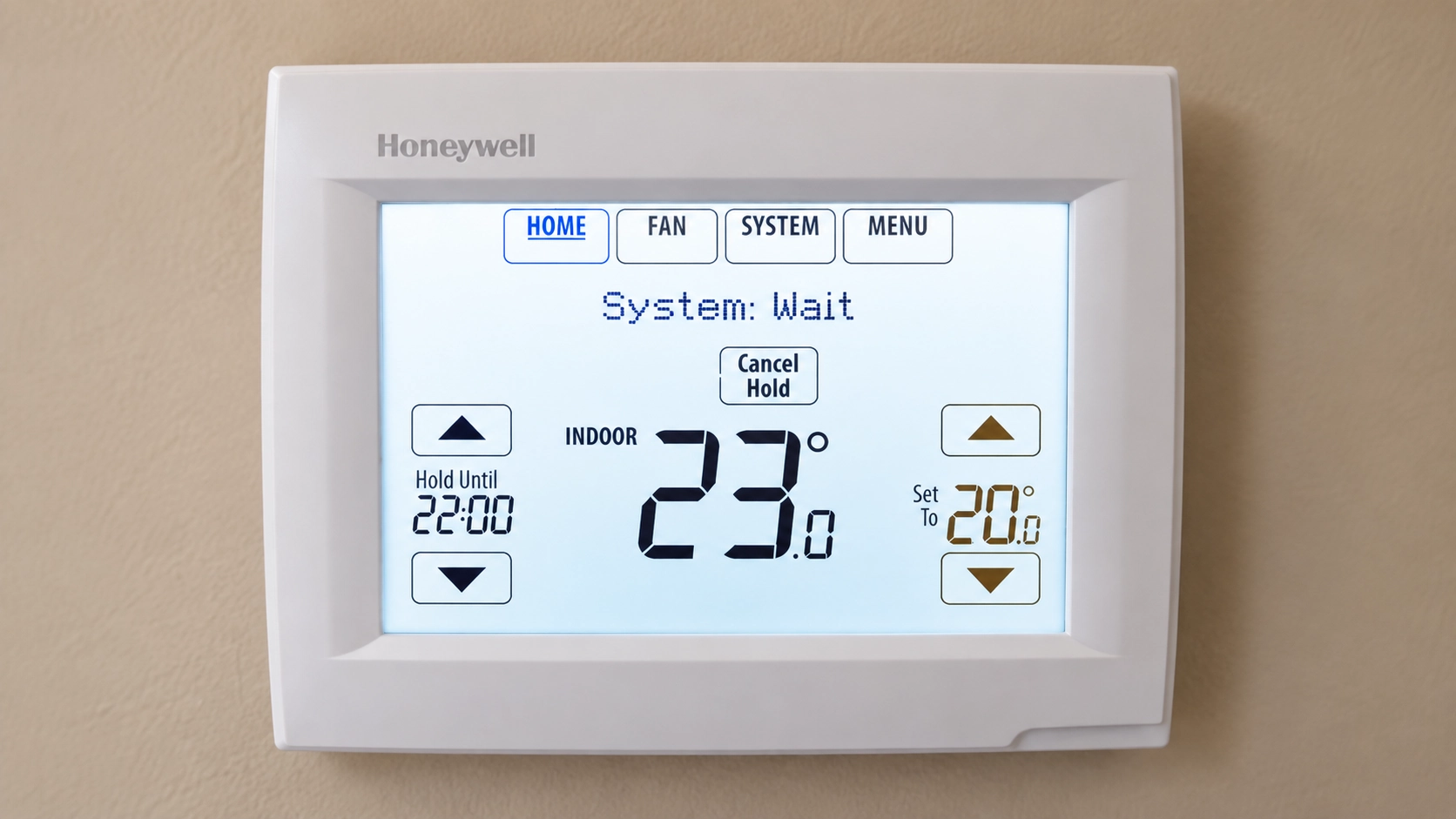
The thermostat acts as the reference thermometer for your central HVAC system. If it is installed in an area that is much warmer or colder than the rest of the home, the system may react to conditions that do not accurately represent how the occupants actually feel.
In a Beaconsfield home, especially a multi-storey property, thermostat placement should be considered together with system sizing, ductwork, and airflow between rooms.
The Thermostat Only Knows One Part of Your Home
A thermostat seems like a fairly simple device.
It measures temperature and tells the system when to heat or cool.
The problem is that it does not measure the temperature everywhere.
Imagine trying to understand the temperature throughout your entire home while being allowed to use only one thermometer. You would probably want to place that thermometer somewhere representative of the house.
That is essentially the role of the thermostat.
If it is installed in an unusually warm, cold, sunny, or drafty location, the system may receive a distorted picture of the actual indoor conditions.
Why Placement Affects System Operation
Consider a simple example.
The thermostat is installed in a hallway that receives direct cold air from a supply register.
The hallway reaches the requested temperature quickly.
The thermostat then tells the system that the house is cool enough, so the cooling system slows down or shuts off.
Meanwhile, an upstairs bedroom may still be several degrees warmer.
The system is operating normally based on the information it receives. The problem is that the information does not necessarily represent the whole home.
That is why thermostat placement should be considered as part of planning a central HVAC system.
An Interior Wall Is Often a Better Starting Point
In many homes, an interior wall in a normally occupied or regularly used area is a good place to start.
Why?
Because an interior wall is generally less directly affected by outdoor conditions than an exterior wall.
The goal is to measure the air temperature in a representative area, not the temperature of a wall being heated by the sun or cooled by outdoor winter conditions.
The thermostat should also be installed at a height where it measures air in the occupied zone rather than air right near the floor or ceiling.
The exact location still depends on the building.
Avoid Direct Sunlight
A window that receives several hours of direct sun can significantly warm the area around the thermostat.
The thermostat may then interpret the entire home as being warmer than it really is.
In summer, direct sunlight can make the thermostat think the house is hotter than it actually is and extend cooling operation. In winter, the same localized warming can delay the start of the heating system while other rooms are already getting cooler.
In Beaconsfield homes with large windows or bright rooms, sun exposure is therefore worth considering when choosing a thermostat location.
Avoid Exterior Doors and Drafts
Installing a thermostat near an exterior door may seem convenient, especially if the wiring is already accessible.
But every time the door opens, the thermostat can be exposed to a burst of outdoor air.
In winter, a cold draft can trigger the heating system even if the rest of the home is comfortable.
In summer, warm humid air can create the opposite effect.
The thermostat should measure normal indoor conditions, not the few seconds when someone walks in carrying groceries.
The Kitchen Can Distort Readings
A kitchen regularly produces heat.
The oven, stove, dishwasher, and even several people in the same room can temporarily raise the local temperature.
A thermostat installed too close to that area may react to cooking activity rather than the average needs of the home.
A similar issue can occur near a fireplace or another major heat source.
Be Careful Around Supply Registers
A supply register blowing directly toward the thermostat can create a rather ridiculous feedback loop.
The system starts cooling.
Cold air reaches the thermostat quickly.
The thermostat believes the whole house is cool.
The system reduces output or shuts off.
More distant rooms have not yet reached a comfortable temperature.
Technically, everything is working. Practically, the occupants are wondering why one bedroom still feels like July while the hallway already feels like October.
The thermostat should therefore not be installed directly in the airflow from a supply register.
Staircases Can Complicate Things
In a two-storey home, warm air tends to rise.
A staircase can therefore have conditions that differ from the rooms around it.
Installing a thermostat directly in that area may sometimes produce a reading that reflects vertical air movement more than the average temperature of the occupied rooms.
This can become even more noticeable in homes with cathedral ceilings, mezzanines, or large open spaces.
That does not mean every hallway or staircase is automatically a poor location, but airflow should be understood before choosing the final placement.
A Thermostat Cannot Correct Every Comfort Problem
Moving the thermostat can improve the quality of the temperature reading, but it cannot turn a poorly balanced duct system into a perfectly even one.
If a bedroom receives too little air, the issue may be related to the ductwork.
If the upper floor remains consistently warmer, air distribution, return air, insulation, or the building’s heat load may be contributing factors.
The thermostat is only one part of the system.
In a central system, comfort depends on factors such as:
- equipment sizing;
- airflow;
- ductwork;
- return air paths;
- system balancing;
- insulation;
- sun exposure;
- the layout of the home.
The thermostat tells the system what to do, but it cannot distribute the air by itself.
What About Multi-Storey Homes?
Larger West Island homes can present a particular challenge.
A single thermostat on the main floor may be expected to represent a basement, a main living level, and several upstairs bedrooms.
Those areas do not always receive the same amount of sunlight and may not have the same heating or cooling needs at the same time.
In some projects, the answer may involve better airflow distribution or a zoning strategy rather than simply moving the thermostat.
Each home should be evaluated according to its layout.
What to Review During a Replacement Project
When a central system is being replaced, the thermostat should be reviewed along with the rest of the installation.
It is useful to check:
- its current location;
- sun exposure;
- proximity to supply registers;
- proximity to doors and windows;
- natural airflow through the home;
- temperature differences between floors;
- how the rooms are actually used;
- the layout of the duct system.
An on-site estimate makes it possible to review these factors in the real home rather than choosing a thermostat location only from a floor plan.
FAQ
What is the best place to install a central thermostat?
In general, a representative interior area away from direct sunlight, exterior doors, major heat sources, and the direct airflow from a supply register is a good choice. The exact location still depends on the layout of the home and how air moves through it.
Why is the thermostat temperature different from the temperature in a bedroom?
The thermostat only measures the area where it is installed. Temperature differences between rooms can be caused by sun exposure, multiple floors, airflow, insulation, closed doors, or the duct system.
Can moving the thermostat fix uneven temperatures?
Sometimes, especially if the current location gives a poor representation of the rest of the home. But uneven temperatures can also be related to airflow, ductwork, return air, system sizing, or balancing. The thermostat should therefore be evaluated as one part of the complete system.
Plan Your Central HVAC System in Beaconsfield
A good central HVAC system depends on more than the equipment installed in the mechanical room. The thermostat, ductwork, and the way air moves through the home all need to work together.
Book a FREE HVAC Estimation Visit with Air Climatisation VS to review your central system and comfort options in Beaconsfield.