
By Tarik, Senior HVAC Specialist at Air Climatisation VS
Quick Takeaway
Replacing a central heat pump or furnace involves more than selecting new equipment. Before a central HVAC upgrade in Dollard-des-Ormeaux, review mechanical-room space, access, duct connections, condensate drainage, filtration, electrical requirements, and the existing air-distribution network. A well-planned mechanical room supports installation and future equipment access.
Why the Mechanical Room Matters
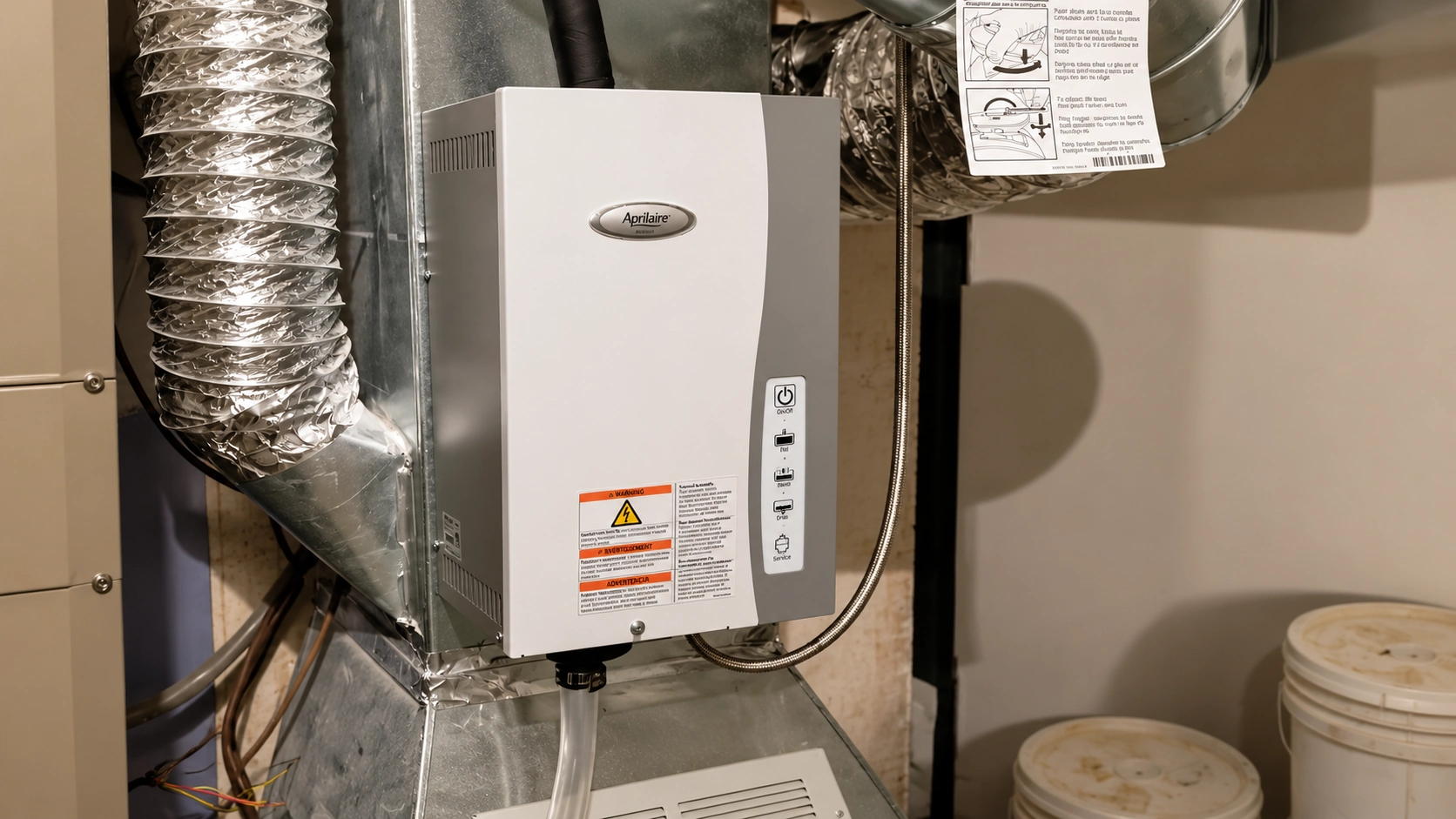
Central systems are often installed in basement mechanical rooms and utility spaces that may also contain a water heater, electrical equipment, shelves, or laundry appliances. A replacement may have different dimensions, connection points, and clearance requirements. Buying new HVAC equipment is like replacing a kitchen refrigerator: fitting the appliance is only one part of the job; access and connections also matter.
Equipment Dimensions Are Only the Beginning
A new furnace or air handler may not align with the former installation even if the equipment looks similar. Manufacturer-required service clearances and access panels need room. Filters should remain accessible for replacement, and condensate drainage must be designed for the actual installation.
Access for Installation and Future Work
Service access matters for filters, panels, blowers, and other accessible components. An installation should not leave equipment boxed in behind permanent shelving, pipes, or other appliances.
Drainage and Condensate Management
Cooling equipment typically produces condensate during dehumidification. The drain route must suit the equipment and location; planning this early reduces the need for improvised adjustments.
Existing Ductwork Can Affect the Upgrade
A central system relies on supply and return ducts. Before central HVAC replacement, review their condition, configuration, and airflow capacity. A stronger unit cannot overcome undersized distribution. Return-air paths are just as important as supply registers; restricted returns may affect pressure and airflow.
Duct Transitions and Layout
The new equipment may have different outlet dimensions or connection positions. Suitable transitions may be needed to connect existing ducts without compromising airflow.
Should the Furnace and Heat Pump Be Planned Together?
In some central HVAC configurations, a heat pump can operate alongside a compatible furnace or another backup heating system. Whether the existing furnace can be retained depends on equipment compatibility, airflow requirements, controls, installation conditions, and the overall heating strategy. These factors should be reviewed before selecting the replacement components. Two appliances fitting in the same room does not guarantee system compatibility.
Electrical and Control Requirements
Electrical connections and thermostat compatibility may differ between existing and replacement systems. Coordinate electrical work with qualified professionals. Not every heat pump installation requires a panel upgrade; the answer depends on the equipment and existing infrastructure.
Mechanical Room Storage and Working Space
Utility rooms often accumulate boxes and household supplies. Clearing access before replacement helps the crew remove old equipment and move in new components. Permanent storage must not obstruct required clearances or filter access.
What to Review During an HVAC Estimation Visit
Review existing equipment, mechanical-room dimensions, access routes, supply and return duct connections, filters, drainage, electrical and controls considerations, and heating and cooling requirements. Our West Island heat pump guide discusses equipment configurations. Eligible projects may qualify for Hydro-Québec’s LogisVert; eligibility depends on the current program conditions, equipment, building, documentation, and installation.
Filter Location
Air filters must be accessible for replacement. A filter hidden behind a shelf, pipe or other equipment may technically be present but inconvenient for the homeowner to reach. An upgrade is a good opportunity to review filtration access.
Supply Air Connections
Supply ducts distribute heated or cooled air to the rooms. The new equipment’s airflow requirements must be compatible with the duct network. Installing a more powerful unit does not solve inadequate distribution by itself.
Return Air Connections
Return air completes the circulation path back to the central equipment. Restricted or insufficient return-air pathways can affect pressure and airflow. Return-air planning belongs in the same discussion as duct sizing and equipment selection.
Equipment Compatibility and Heating Strategy
In some central configurations, a heat pump operates alongside a compatible furnace or another backup heating source. Whether the existing furnace can remain depends on equipment compatibility, airflow, controls and the overall heating strategy. Simply fitting both components in the room is not enough.
Electrical and Thermostat Considerations
New equipment may introduce different electrical or control needs. Coordinate any required electrical work with a qualified professional. Do not assume every replacement requires an electrical-panel upgrade; this depends on the proposed unit and current installation.
Making Space for Installation
A utility room often doubles as household storage. Before installation, clear access routes for removing old equipment and bringing in new components. Permanent shelving and stored items must not block required clearances or service panels.
Heating, Cooling and Rebate Eligibility
Homeowners should assess actual heating and cooling requirements before selecting replacement equipment. Some eligible projects may qualify for Hydro-Québec’s LogisVert program, but eligibility depends on equipment, building, installation, documentation and the program rules in effect.
FAQ
Can a new central heat pump use my existing ductwork?
Often, but the ducts should be reviewed for capacity, layout, leakage, and condition before equipment selection.
Do I need to replace my furnace when installing a central heat pump?
Not always. The decision depends on equipment compatibility, condition, controls, airflow, and the heating strategy.
Does a central HVAC upgrade require a larger mechanical room?
Not necessarily. Required dimensions, clearances, and connections depend on the equipment and existing installation.
Book a FREE HVAC Estimation Visit
Air Climatisation VS can review your property, equipment options, and installation constraints before recommending a suitable solution.