
By Tarik, Senior HVAC Specialist at Air Climatisation VS
Quick Takeaway
An open-concept home may allow air to circulate more freely, but that does not automatically mean one large heat pump can provide balanced comfort throughout the entire house. Proper heat pump sizing in Kirkland depends on heating and cooling requirements, ceiling height, windows, insulation, room layout, and how air moves between floors. The goal is to select a system that fits the home’s actual needs, not simply the largest model available.
Why Open-Concept Homes Need Careful Heat Pump Planning
Removing walls between a kitchen, dining area, and living room can create a spacious main floor with fewer obstacles to airflow. For homeowners in Kirkland, that layout may seem ideal for a single wall-mounted heat pump. Sometimes it can be. But an open floor plan is only one part of the equation. A home with high ceilings, large south-facing windows, and a finished basement can have very different heating and cooling requirements from a compact bungalow with a similar floor area. The shape of the space matters as much as its size.
Heat Pump Capacity Is Not Just About Square Footage
Heat pump capacity describes how much heating or cooling the system can provide under specified conditions. Floor area is easy to measure, but it does not reveal how quickly a home gains heat in summer or loses heat in winter.
Insulation and Air Leakage
A well-insulated house generally requires less heating and cooling than a similar house with substantial heat loss and air leakage. Two homes on neighbouring streets in Kirkland may have comparable layouts but different windows, insulation, or renovation histories.
Windows and Sun Exposure
Large windows provide valuable natural light but can raise cooling requirements during sunny afternoons. Window area, orientation, shading, and glazing characteristics all affect the load.
Ceiling Height
Cathedral ceilings influence air movement and temperature distribution. Warm air can accumulate near the ceiling, especially during heating season. Unit placement and airflow pattern therefore matter alongside capacity.
Why a Larger Heat Pump Is Not Automatically Better
Choosing a heat pump resembles selecting a pump for plumbing: a larger pump cannot guarantee that every faucet receives the right flow. Distribution and actual demand still matter. An undersized system may struggle during demanding weather. An oversized system may cycle more frequently depending on its modulation range and the building load, affecting temperature stability and moisture control. Variable-capacity systems can adjust their output but still require appropriate selection.
Can One Wall-Mounted Heat Pump Serve the Entire Open Floor?
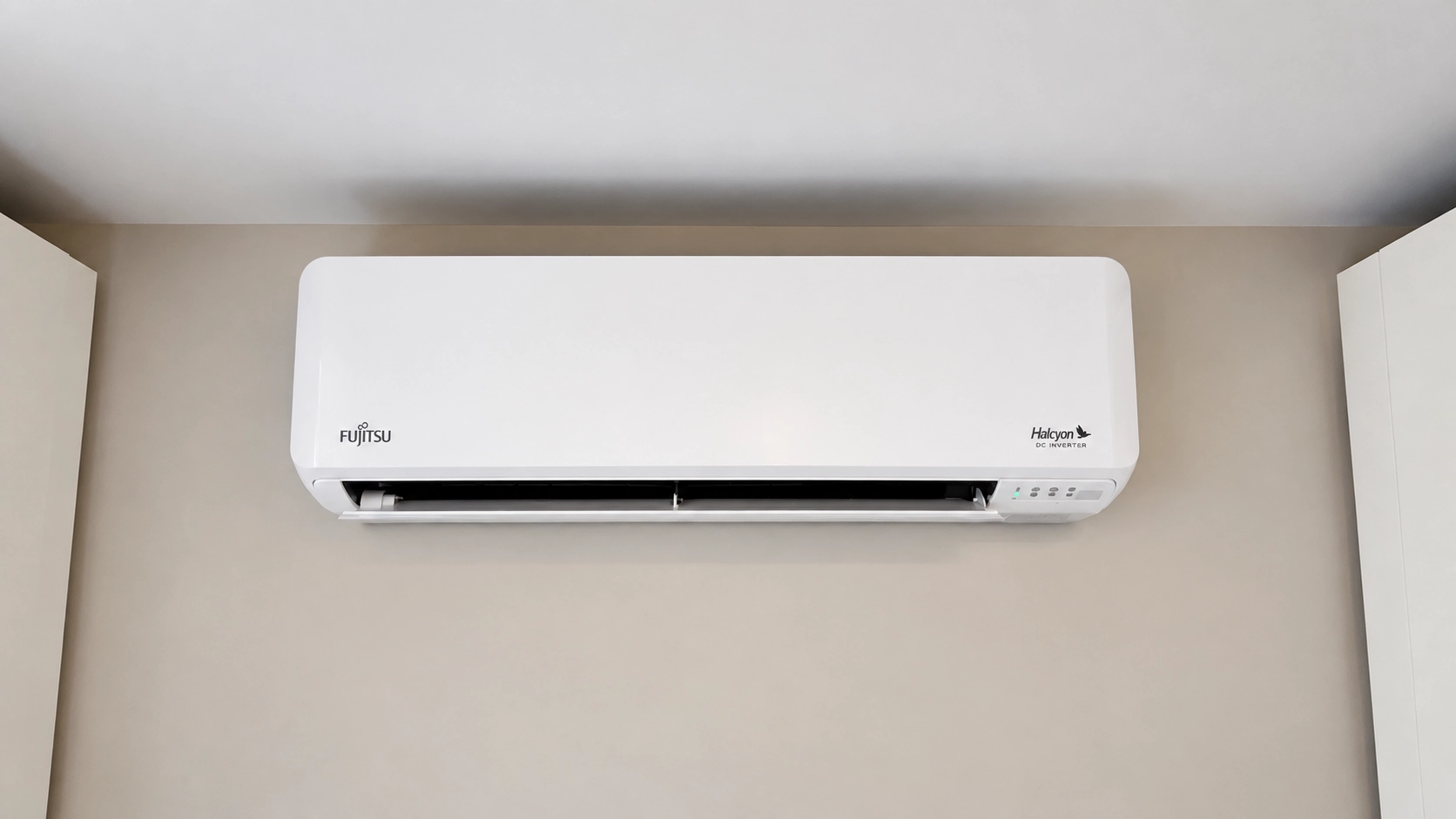
A wall-mounted heat pump may suit a shared kitchen, dining, and living space if conditioned air can reach occupied areas. Distance, windows, exterior doors, ceiling geometry, and heating and cooling loads all matter. Closed bedrooms and remote rooms may receive less conditioning than the main living area.
What About Upstairs Bedrooms?
A main-floor indoor unit should not automatically be expected to control temperatures in second-floor bedrooms. Stairwells, doors, floor plans, and solar exposure create different comfort zones. A multisplit or, where suitable ducts exist, a central HVAC system may be worth reviewing.
Wall-Mounted, Multisplit, or Central HVAC?
A single-zone wall-mounted system can suit a clearly defined open area. Multisplit equipment connects several indoor units to one outdoor unit and can serve different floors without adding central ducts. A central heat pump uses an existing duct network, provided the ducts can deliver the required airflow. Our West Island heat pump guide discusses these choices in greater detail.
What Should Be Checked Before Selecting a System?
A FREE HVAC Estimation Visit can review the building envelope, heating and cooling loads, electrical capacity, indoor placement, outdoor clearances, existing ducts, and homeowner priorities. Some eligible installations may qualify for Hydro-Québec’s LogisVert program; eligibility depends on equipment, building, documentation, installation, and current rules.
Single-Zone Wall-Mounted Heat Pump
A single-zone system can suit an open main floor or another clearly defined comfort area. It is less suitable when several enclosed rooms need independent conditioning.
Multisplit Heat Pump
A multisplit connects multiple indoor units to one outdoor unit. This arrangement can help serve different floors or groups of rooms without adding a central duct network. The number and position of indoor units should reflect actual heating and cooling loads, not merely the number of rooms.
Central Heat Pump
A central heat pump can distribute conditioned air through an existing duct system. For Kirkland homes that already have a furnace and ductwork, a central upgrade may be practical, provided the ducts and airflow are suitable for the proposed equipment.
Understanding the Whole-Home Assessment
An installation assessment should consider the building envelope, heating and cooling loads, electrical capacity, indoor-unit positioning, outdoor clearance and the homeowner’s comfort priorities. For central systems, the condition of the duct network also matters. Two homes with identical floor areas can behave differently because of insulation, window orientation and how the family uses each floor.
Capacity and Temperature Stability
Modern variable-capacity systems can adjust their output, but they must still be selected within an appropriate operating range. An undersized unit may not meet demand during demanding weather, while an oversized one can cycle more often depending on its modulation range. A suitable capacity and a practical air-distribution plan matter more than selecting the biggest equipment.
Subsidy Planning
Some eligible heat pump installations may qualify for financial assistance through Hydro-Québec’s LogisVert program. Eligibility depends on the equipment, building, installation, documentation and current program rules. Program eligibility should be checked before equipment selection is finalized.
FAQ
Does an open-concept home need a bigger heat pump?
Not necessarily. Capacity depends on insulation, windows, heat loss, solar gain, and other building characteristics, not the absence of interior walls alone.
Can one wall-mounted heat pump heat and cool two floors?
It may contribute to comfort across connected spaces, but it should not be assumed to provide uniform temperatures across separate floors and enclosed bedrooms.
Should I replace my existing central system with a wall-mounted heat pump?
That depends on duct condition, comfort goals, and the areas served. A central upgrade can make sense when a suitable duct network already exists.
Book a FREE HVAC Estimation Visit
Air Climatisation VS can review your property, equipment options, and installation constraints before recommending a suitable solution.