
By Tarik, Senior HVAC Specialist at Air Climatisation VS
Quick Takeaway
For many homes in Pointe-Claire, a central heat pump can be a practical way to improve year-round comfort without adding wall units in every room. But the real question is not only which equipment to choose. The ductwork, airflow, insulation, electrical capacity, and existing furnace or air handler all need to work together for the system to perform properly.
Why Central Heat Pumps Make Sense in Many Pointe-Claire Homes
Pointe-Claire has many detached homes, split-level homes, and older West Island properties that already have central ductwork. That existing duct network can make a central heat pump a strong option because the system can move heated or cooled air through the whole home from one central setup.
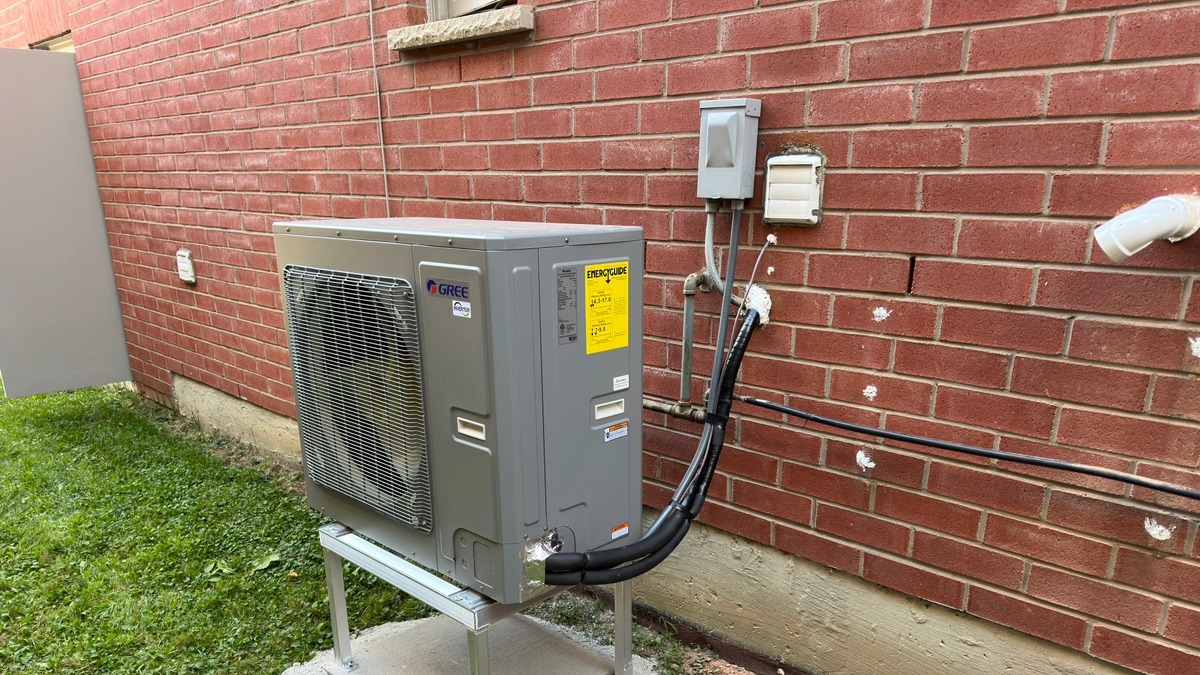
A central heat pump is different from a basic air conditioner because it can support both cooling and heating. In summer, it helps remove heat from inside the home. In colder seasons, it can move heat into the home. Natural Resources Canada explains heat pump basics clearly: heat pumps transfer heat rather than simply creating it from scratch, which is why they are often discussed as an energy-efficient comfort option for Canadian homes.
The concept is simple, but the home’s existing layout and mechanical setup still matter.
A central heat pump works best when the rest of the home is ready for it. If the ducts are undersized, leaking, poorly balanced, or not reaching certain rooms properly, the new equipment may not deliver the comfort the homeowner expects. A bigger system does not automatically fix a poor air distribution setup. It can even make comfort worse if the sizing is wrong.
Start With the Ductwork, Not the Equipment Brochure
A central HVAC system depends on ductwork the same way a delivery truck depends on roads. You can choose stronger equipment, but if the air pathways are narrow, restricted, or poorly connected, comfort will still suffer. Airflow needs a clear route to reach the rooms that need heating and cooling.
Before choosing a central heat pump in Pointe-Claire, the ductwork should be reviewed for several practical points:
- Whether enough air reaches each floor
- Whether some rooms are consistently too warm or too cold
- Whether return air is properly handled
- Whether ducts are damaged, restricted, or poorly insulated
- Whether the existing system was sized correctly for the home
Older West Island homes can have ducts designed around an older furnace or air conditioner, not necessarily a modern heat pump. That does not mean a central heat pump is a bad idea. It means the installation should be planned carefully.
For homeowners already considering a whole-home upgrade, Air Climatisation VS offers central HVAC installation planning that looks beyond the equipment itself and reviews how the system will actually move air through the home.
Central Heat Pump vs Wall-Mounted Heat Pump
A central heat pump is often a good fit when the home already has useful ductwork and the goal is whole-home comfort from one system. It can serve bedrooms, living areas, hallways, and basements through the existing duct network.
A wall-mounted heat pump can be a better fit when the home does not have ducts, when adding ducts would be too invasive, or when the homeowner wants targeted comfort in a specific zone. For example, a room above a garage, a home office, or an addition may not receive enough airflow from the central system. In that case, a separate wall-mounted unit might make more sense.
This is why the decision should not be framed as “central is better” or “wall-mounted is better.” The better question is which system fits the home, the ductwork, and the comfort goals.
A central heat pump may be the stronger option when:
- The home already has usable ducts
- The homeowner wants whole-home heating and cooling
- The existing furnace or air handler can be integrated properly
- The ducts can deliver enough airflow
- The home layout supports central distribution
A wall-mounted system may be the stronger option when:
- The home has no ducts
- Only one or two areas need improved comfort
- Ductwork changes would be too disruptive
- The home has additions or rooms that central airflow does not serve well
For comparison, homeowners can also review wall-mounted heat pump installation options before deciding which approach fits the home.
Sizing Matters More Than Going Bigger
One of the easiest mistakes in HVAC planning is assuming a larger unit will automatically create better comfort. In practice, oversizing can create short cycles, uneven temperatures, and weaker humidity control.
If a heat pump is too small, it may struggle to maintain comfort during heavier heating or cooling demand. If it is too large, it may cycle too quickly, reduce humidity control, create uneven temperatures, or place unnecessary stress on the system. The goal is not the biggest unit. The goal is the right capacity for the home.
Sizing depends on several factors:
- Home size and layout
- Insulation level
- Window type and sun exposure
- Number of floors
- Basement conditions
- Ductwork design
- Existing furnace or air handler setup
- Homeowner comfort expectations
In Pointe-Claire, this matters because many homes have additions, finished basements, older duct layouts, or a mix of renovated and original areas. A proper planning visit helps identify those details before equipment is selected.
Existing Furnace Compatibility
Many central heat pump projects involve an existing furnace or air handler. In some homes, the heat pump can work with the existing central system. In others, the furnace, blower, coil, controls, or ductwork may need changes to support proper performance.
This does not mean every home needs a full replacement. It means the current setup should be checked before making promises. Comfort depends on the whole system, not just the outdoor unit.
During a planning visit, the technician should look at:
- Furnace or air handler condition
- Blower capacity
- Existing coil setup
- Thermostat compatibility
- Electrical requirements
- Space around indoor and outdoor equipment
- Drainage and refrigerant line routing
Air Climatisation VS has more than 100 years of combined team experience, which is useful on projects where equipment selection, airflow, and installation constraints all have to line up. A site visit helps confirm those details before a homeowner commits to a system.
Comfort Across Multiple Floors
Split-level and two-storey homes in Pointe-Claire often have comfort differences between floors. Bedrooms may feel warmer at night. Basements may stay cooler and more humid. Main floors may be comfortable while upper rooms lag behind.
A central heat pump can help, but only if airflow is balanced properly. Sometimes the solution involves equipment selection. Sometimes it involves duct adjustments, return air improvements, thermostat placement, or zoning discussion.
In many homes, comfort problems come from several small issues working together, such as duct layout, return air, insulation, thermostat placement, and equipment sizing.
A good central HVAC plan should consider how the family actually uses the home. A retired couple, a family with children, and a homeowner working from a second-floor office may all need different comfort priorities from the same square footage.
Should Subsidies Affect the Decision?
Subsidies can be part of the planning conversation, but they should not be the only reason to choose a system. Some heat pump projects may qualify for energy-efficiency programs, depending on the equipment, installation, home, documentation, and current program rules.
The safest approach is to check eligibility before selecting equipment. Reviewing program requirements early can help avoid choosing a system that does not match current documentation or eligibility rules.
If a subsidy or grant may apply, the equipment model, installation details, and paperwork should be reviewed as part of the estimate process.
What to Expect During a FREE HVAC Estimation Visit
A FREE HVAC Estimation Visit helps confirm whether a central heat pump is a good fit for your Pointe-Claire home. It should be more than a quick look at the old unit. A useful visit reviews the home, the existing system, and the comfort goals before recommending equipment.
A useful visit should review:
- Existing ductwork
- Furnace or air handler setup
- Outdoor unit location
- Electrical requirements
- Comfort issues by room or floor
- Heating and cooling goals
- Possible wall-mounted alternatives if central is not ideal
- Eligibility considerations if subsidy programs are relevant
After the visit, the homeowner can compare options with a clearer understanding of what fits the home, not just what fits a product catalogue.
FAQ
Is a central heat pump a good choice for older homes in Pointe-Claire?
It can be, especially if the home already has usable ductwork. The ducts, airflow, insulation, furnace or air handler, and electrical setup should be checked before choosing equipment.
Can a central heat pump replace my existing central air conditioner?
In many homes, a central heat pump can replace or upgrade an older central cooling setup while also supporting heating. The exact approach depends on the existing indoor equipment, ductwork, controls, and installation requirements.
Is a wall-mounted heat pump better than a central heat pump?
Not automatically. A wall-mounted heat pump can be better for homes without ducts or for targeted rooms, while a central heat pump can be better for whole-home comfort when the ductwork is suitable.
Book a FREE HVAC Estimation Visit with Air Climatisation VS to review whether a central heat pump makes sense for your Pointe-Claire home.